Research overview
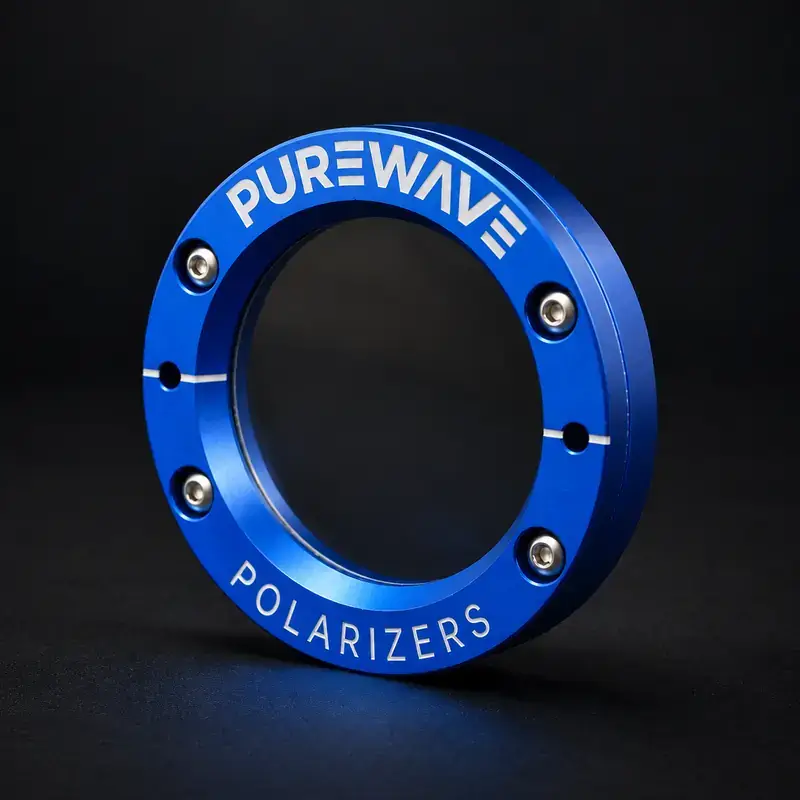
This paper demonstrates terahertz photonic structures made from layers of dielectric rods in acrylonitrile styrene acrylate, fabricated by low-cost, rapid fused deposition modelling (FDM) 3D printing. Their spectral and dynamic response was measured by THz time-domain spectroscopy, with a wire-grid polarizer aligning the THz field parallel to the rods, and compared with an exact analytical solution of Maxwell’s equations. Structures of 1 to 14 rod layers showed forbidden bands that agree well with simulations below 0.3 THz. At higher frequencies the bands close, revealing disorder from the 3D printing tolerances. By analysing the broadening of transmitted THz pulses, the authors quantified this disorder and estimated a THz diffusion coefficient of about 90 m²/s, opening the way to complex 3D-printed photonic structures for the THz range.
Key findings
- Low-cost FDM 3D printing of multilayer THz photonic structures (1–14 rod layers)
- Measured forbidden bands agree with exact simulations below 0.3 THz
- Closure of band gaps at higher frequencies attributed to fabrication disorder
- THz pulse broadening used to quantify disorder and estimate a diffusion coefficient of about 90 m²/s