Research overview
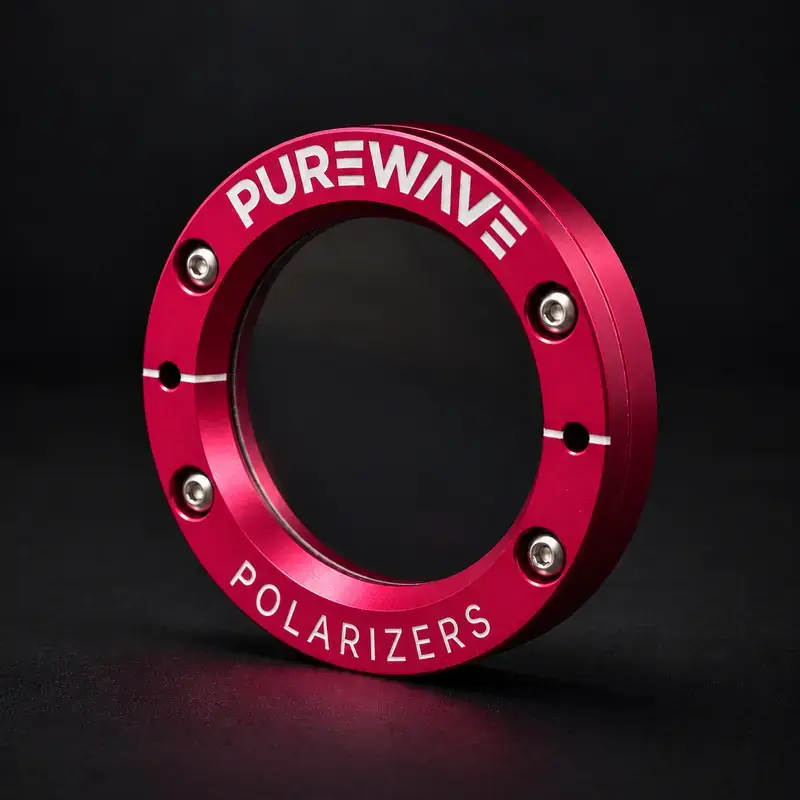
Researchers at the Université Grenoble Alpes (LIPhy), the Institut des Sciences Moléculaires d’Orsay and IEMN Lille built a continuously tunable terahertz source from 0.1 to 1.4 THz with Hz-level linewidth and very low phase noise. Two commercial telecom DFB lasers are locked by optical feedback to a single highly stable V-shaped cavity, and their beat note is converted to THz by photomixing. The phase noise was measured up to 1.2 THz, and the long-term drift is about 0.15 mHz/s. To show what the source can do, the team recorded low-pressure methanol and water absorption lines up to 1.4 THz. They also resolved the hyperfine structure of the 556.9 GHz water line by saturation (Lamb-dip) spectroscopy, with features only 10 kHz wide. In the sub-Doppler setup, a wire-grid polarizer separated the returning beam from the incoming one in a double-pass absorption cell.
Key findings
- Two telecom DFB lasers locked by optical feedback to one V-shaped cavity give a continuously tunable THz source from 0.1 to 1.4 THz by photomixing.
- Hz-level linewidth was demonstrated by phase-noise measurements up to 1.2 THz, with a long-term drift of about 0.15 mHz/s.
- Low-pressure methanol and water absorption lines were recorded up to 1.4 THz, with sub-kHz frequency accuracy referenced to an optical frequency comb.
- Saturation spectroscopy resolved the hyperfine structure of the 556.9 GHz water line, with Lamb dips about 10 kHz wide.
- A roof-top mirror rotated the returning beam’s polarization by 90°, and a polarization grid separated it from the incident beam in the double-pass cell.