Research overview
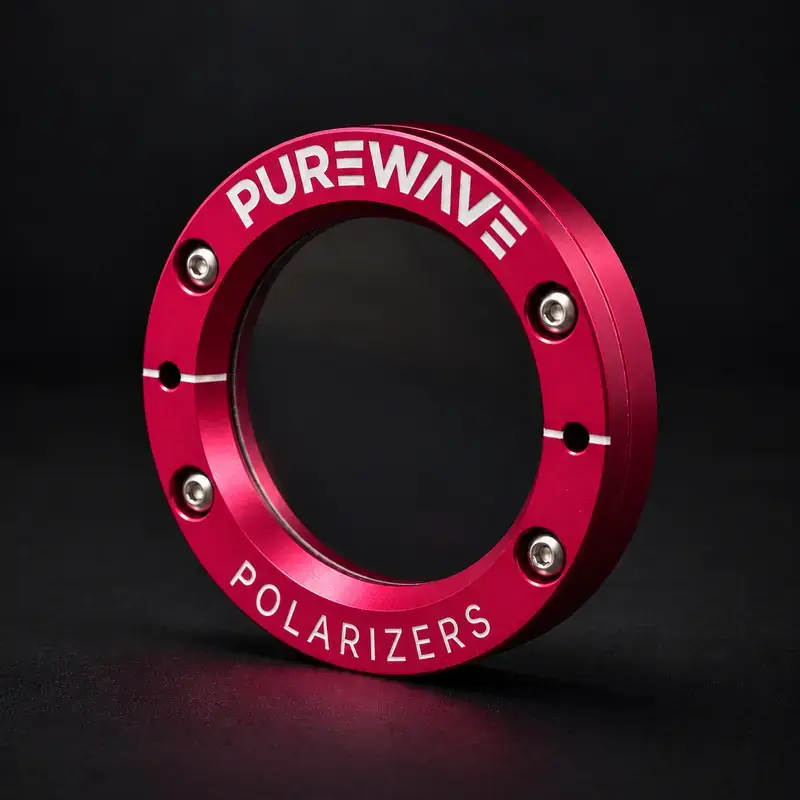
Researchers at the Institut des Sciences Moléculaires d’Orsay and the University of Bordeaux studied the submillimetre-wave spectrum of the hydroxymethyl radical (CH₂OH), combining measurements with theory. CH₂OH is a non-rigid radical: its CH₂ group twists back and forth relative to the OH group, which splits its energy levels by tunnelling. The radical was produced by H-abstraction from methanol with fluorine atoms and measured from 140 to 900 GHz, using frequency and Zeeman modulation. Ab initio calculations mapped the potential energy surface, and a new fitting Hamiltonian including the tunnelling, fine and hyperfine structure reproduced 778 lines. The fit determined the ground-state (N = 0) tunnelling splitting, which earlier studies could not pin down. A Purewave wire-grid polarizer and a roof-top mirror created a double pass through the absorption cell.
Key findings
- Ab initio calculations show that CH₂OH has a large-amplitude, torsion-like motion of its CH₂ group relative to the OH group, which produces a tunnelling splitting.
- The tunnelling splitting depends strongly on the rotational quantum number Ka because of rotation–torsion Coriolis coupling.
- A new fitting Hamiltonian including tunnelling, fine and hyperfine structure reproduced 778 frequencies and wavenumbers using 27 parameters.
- The N = 0 tunnelling splitting, which earlier high-resolution studies could not determine unambiguously, was found from its rotational dependence.