Ultra-high-Q substrate-mode coupled resonances in complementary THz metamaterial

Kobi Ben-Atar, Zhengli Han, Christian Frydendahl, Noa Mazurski, Zhanghua Han, Uriel Levy
Optics Letters
48,
620–623
(2023)
Placeholder image for a 6G and Metamaterials publication
Ben-Atar et al. (2023)
Optics Letters 48, 620 · placeholder image

Research overview

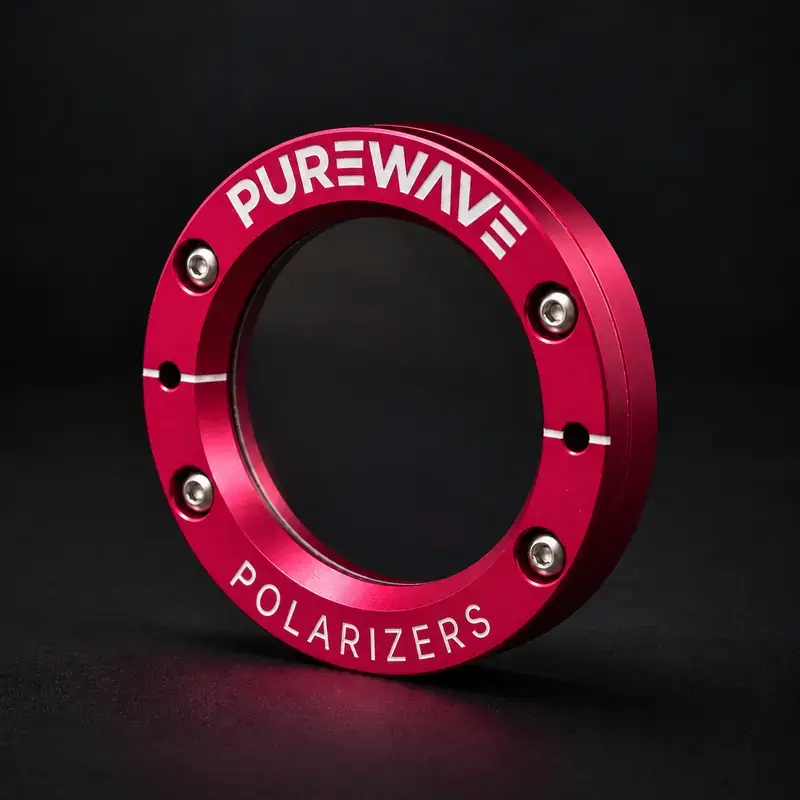
Researchers at the Hebrew University of Jerusalem and Shandong Normal University made a terahertz metamaterial with very sharp resonances. It uses two complementary aluminium layers, a disk-hole pattern separated by a thin SU-8 layer, on a quartz substrate. Coupling the metamaterial’s resonance to modes trapped inside the substrate gave experimental Q-factors of up to 750, which the authors describe as a record. Sharp resonances like these are useful for terahertz sensing and filtering. The device was measured with a continuous-wave photomixer system from 0.25 to 1.3 THz. A Purewave wire-grid polarizer was used to measure how the polarization of the test setup changed with frequency.

Key findings

  • Two complementary aluminium disk-hole layers separated by about 5 µm of SU-8 on quartz support very sharp THz resonances coupled to substrate modes.
  • Experimental Q-factors of up to 750 were reported, a record for this type of device.
  • The design suppresses unwanted Fabry–Pérot oscillations in the substrate, and the sharp resonances stay put when the ellipse dimensions change.
  • Rotating a Purewave polarizer showed the setup’s polarization angle shifting by up to 15° between 0.7 and 0.85 THz, which explains extra dips in the measured spectrum.
Ben-Atar et al.,
2023

Publication details

Journal

Optics Letters

Volume

48

Issue

3

Article

620–623

Published

2023

Research area

6G and Metamaterials

Application

High-Q THz metamaterial resonators for sensing and filtering

Institution

The Hebrew University of Jerusalem