Research overview
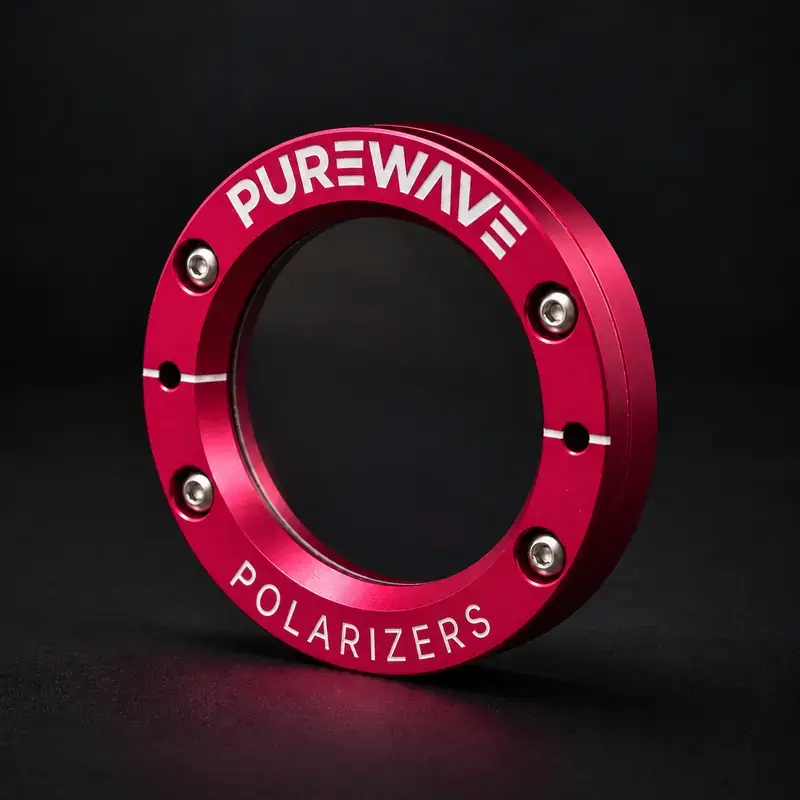
Researchers at the International Laser Centre in Bratislava converted intense, broadband terahertz pulses into the optical domain by four-wave mixing in fluoride crystals. Pulses from a two-colour air-plasma THz source were mixed with an 800 nm femtosecond pump in CaF₂, BaF₂ and MgF₂, producing a signal near 400 nm. The authors trace the effect to strong lattice (phonon) resonances in the 6–14 THz range, which enhance the nonlinear response. Phase matching occurs between a spectrally broadened, frequency-shifted pump at around 814 nm and the THz field. Two Purewave wire-grid polarizers were used together as a variable attenuator for the THz beam. The work points towards detecting THz signals by optical means.
Key findings
- THz four-wave mixing was observed in CaF₂, BaF₂ and MgF₂, giving signals near 400 nm. No signal was seen in fused silica, diamond, sapphire, LiNbO₃ or THz plastics.
- The signal is enhanced by strong transverse-optical phonon resonances in the fluorides in the 6–14 THz range.
- Phase matching occurs between a spectrally broadened pump at around 814 nm and the THz field, within about 20 µm of the crystal surface.
- The signal scales linearly with THz intensity. With pump intensity it shows a threshold around 6×10¹⁰ W/cm² because of pump spectral broadening.
- The signal pulse lasts about 500 fs and is emitted along the pump direction, which rules out backward or non-collinear phase matching.