Research overview
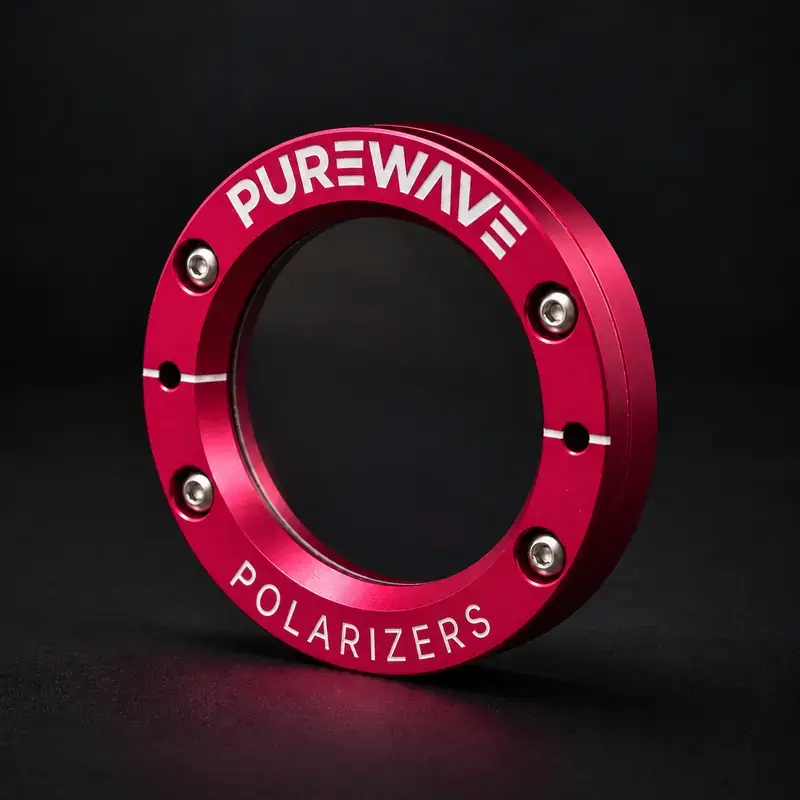
This preprint reports tunable, narrowband terahertz emission from the van der Waals ferroelectrics NbOX₂ (X = I, Br, Cl), a step towards compact, chip-scale THz sources. Under 800 nm femtosecond excitation, each compound emits a sharp peak: 3.13 THz for NbOI₂, 3.68 THz for NbOBr₂ and 4.88 THz for NbOCl₂, with weaker secondary peaks at higher frequencies. The emission comes from infrared-active phonon modes that modulate the spontaneous polarization along the polar axis. Mixed-halogen alloys emit between their parent compounds, giving continuous tuning from about 3.1 to 5.8 THz. In a NbOI₂ device, an applied electric field switched the ferroelectric domains and reversed the polarity of the emitted THz waveform, showing nonvolatile electrical control. A pair of wire-grid polarizers set the detection polarization in the THz measurement.
Key findings
- Narrowband THz emission from NbOI₂, NbOBr₂ and NbOCl₂ at 3.13, 3.68 and 4.88 THz
- Emission driven by infrared-active phonons along the polar axis
- Halogen alloying gives continuous tuning from about 3.1 to 5.8 THz
- Nonvolatile electrical control of THz polarity by ferroelectric switching