Free-standing wire-grid polarizers: measurement & handling

Practical recommendations for safely handling, installing and characterising Purewavepolarizers free-standing terahertz wire-grid polarizers.

Protect the free-standing wire grid

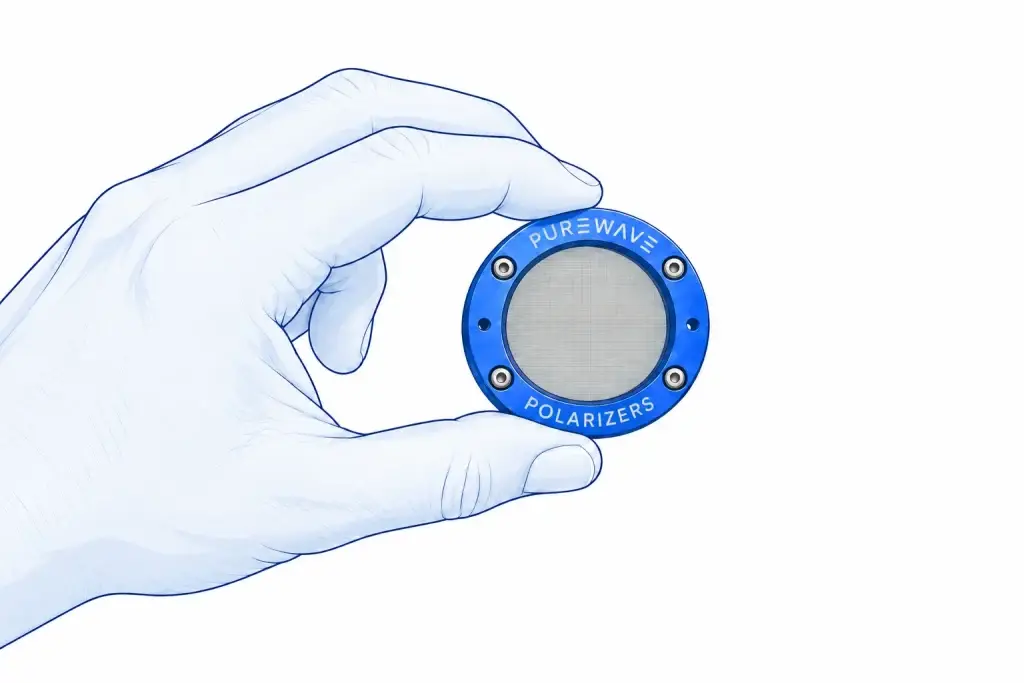
Handle the polarizer only by its outer frame. Never touch, wipe or apply pressure to the wire grid.

Handling a free-standing wire grid

Image of a hand holding a polarizer by the circumference

Hold the frame only

Keep fingers and tools clear of the aperture.

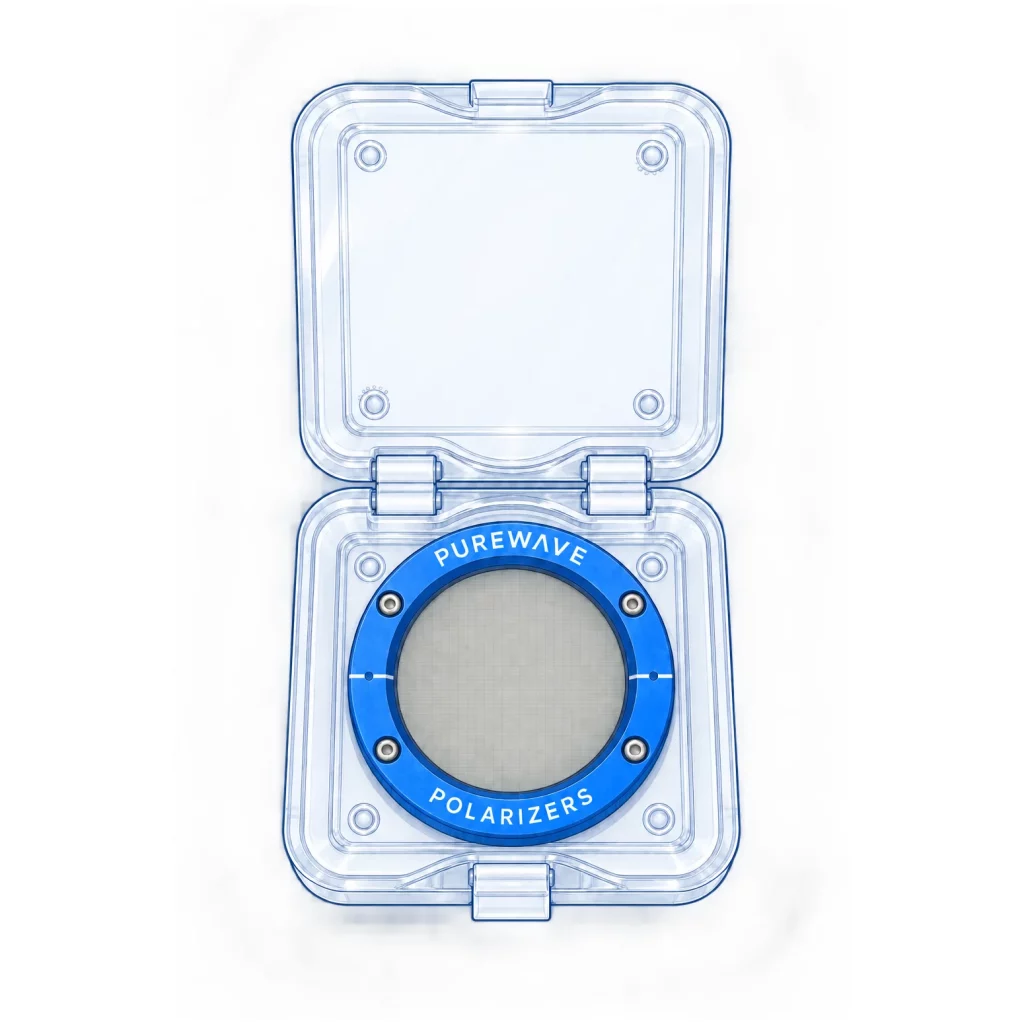
Image of packaged THz polarizer

Keep the grid covered

Return it to its protective packaging when not installed.

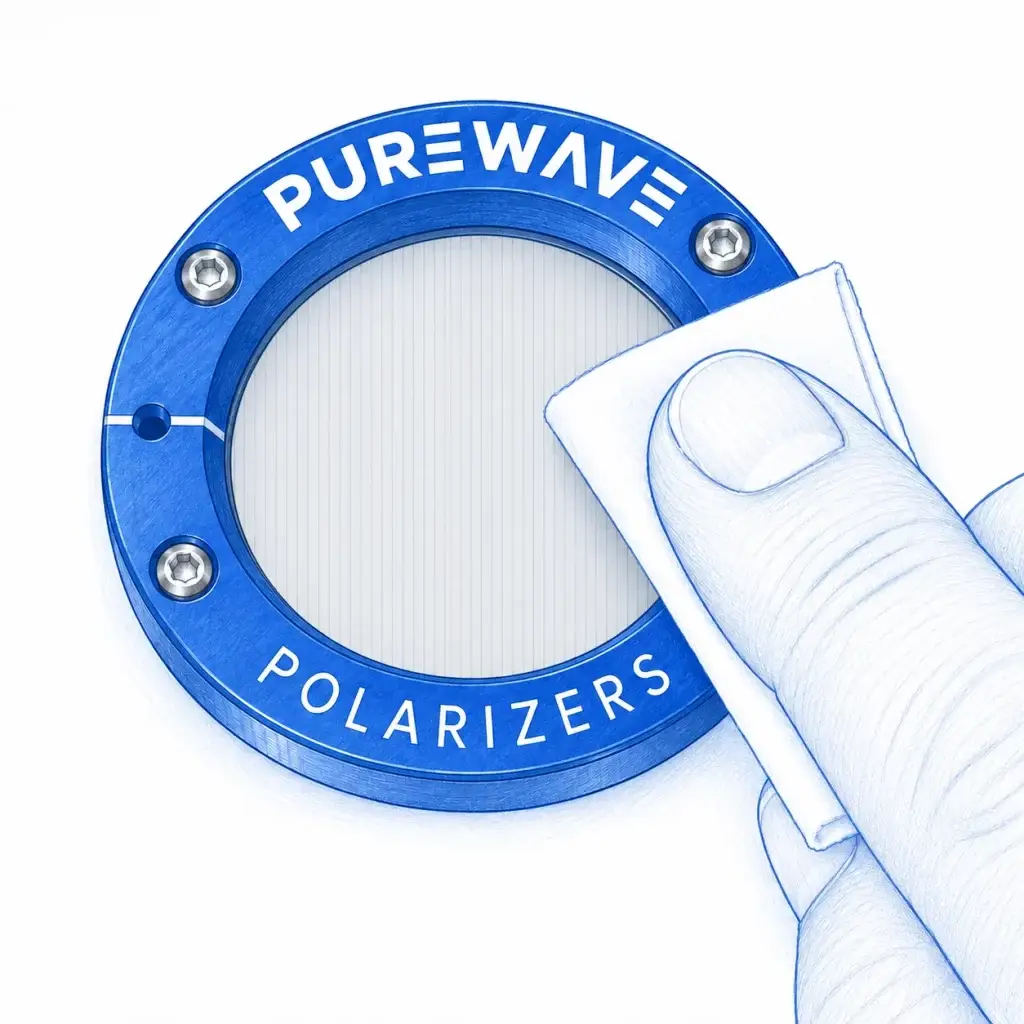
Do not wipe polarizer surface

Never wipe the grid

Do not use conventional optical cleaning methods.

Ask before cleaning

Contact Purewavepolarizers if the grid becomes contaminated.

Installing and orienting the wire-grid polarizer

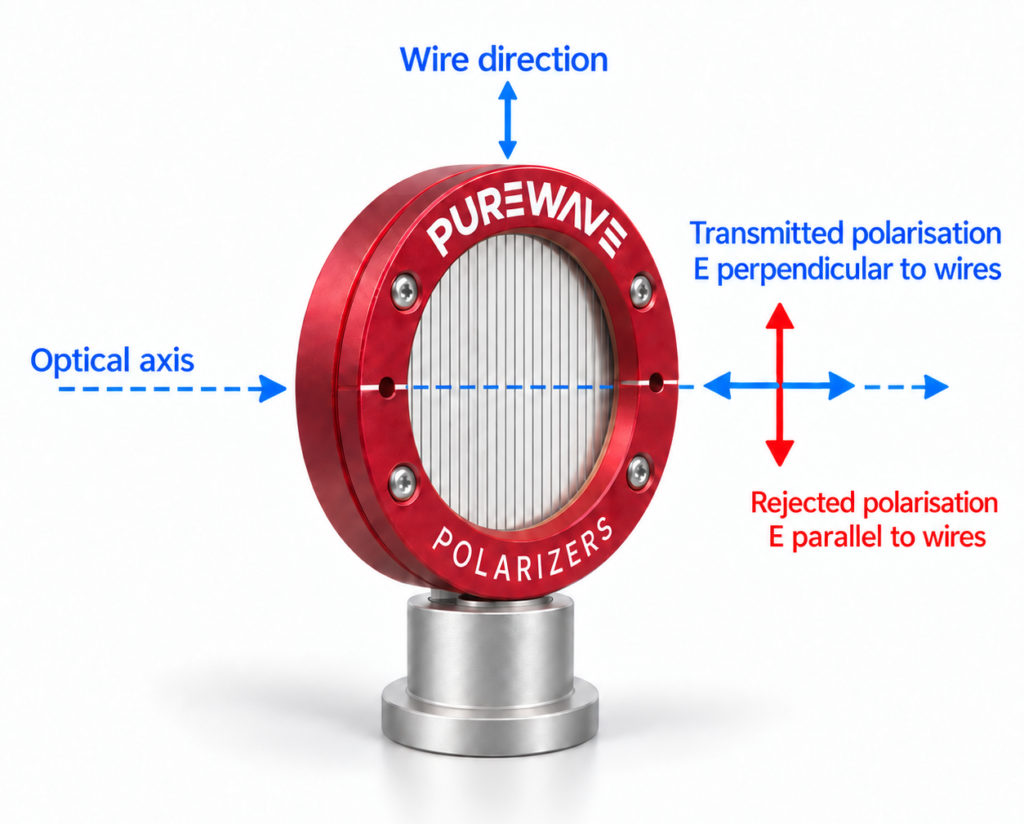
THz polarizer transmission characteristics

Correct installation ensures reliable results

Follow these key points when installing the polarizer in your terahertz system.

  • Handle and secure the outer frame only.
  • Centre the beam within the clear aperture.
  • For standard measurements, position the grid normal to the optical axis.

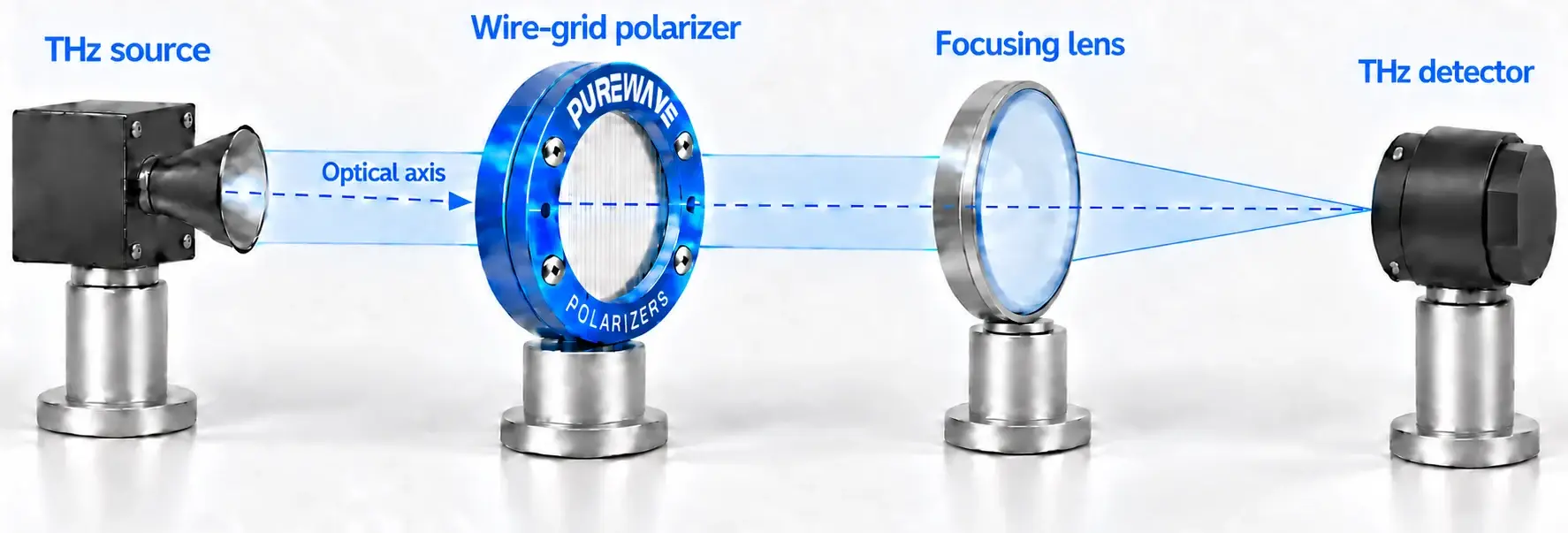
Recommended measurement arrangement

Typical configuration for THz polarizer use
1
Use a collimated beam

Ensure the beam is approximately collimated at the polarizer position.

2
Avoid clipping at the aperture

Keep the beam diameter smaller than the clear aperture.

3
Do not disturb the alignment between reference and sample scans

Maintain the same optical arrangement for reference and sample measurements.
Reliable characterisation

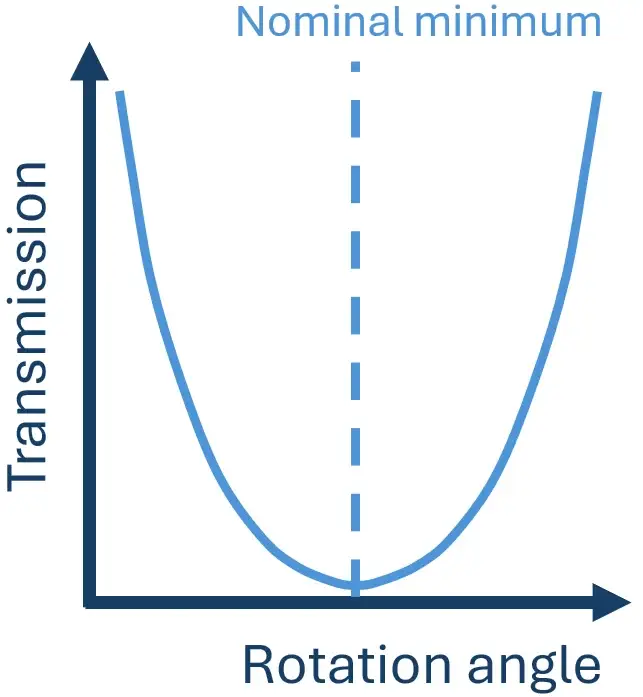
Finding the true minimum

THz finding minimum transmission image
  • Scan through the nominal minimum.
  • Use finer angular steps close to the minimum.
  • Measure on both sides and fit the response.
  • Record the detector noise floor.

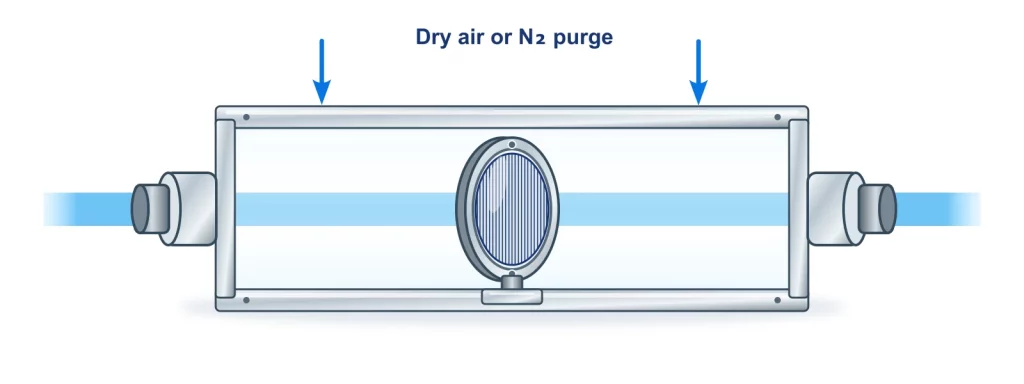
Control water vapour

Image of purged THz polarizer enclosure
  • Purge as much of the THz path as practical.
  • Allow conditions to stabilise before measurement.
  • Use identical conditions for reference and sample scans.
  • Record the purge conditions or relative humidity.

Measurement checklist

  • Part number
  • Reference method
  • Wire orientation
  • Purge conditions
  • Angle of incidence
  • Angular step size
  • Beam diameter
  • Averaging
  • Frequency range and resolution
  • Detector noise floor